Acest ghid este disponibil, deocamdată, doar în engleză.
Every flag has a ratio: how tall it is compared with how wide. In this guide the height comes first, so 2:3 means two units tall and three units wide. Some sources write the width first (3:2). The cloth is the same.

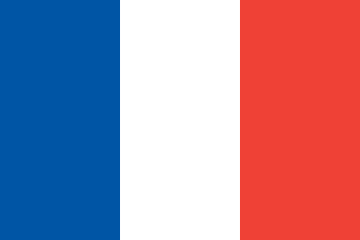
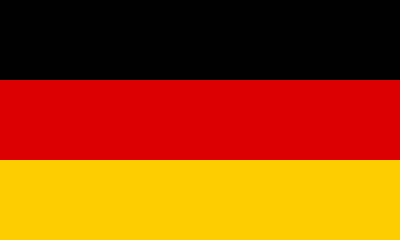
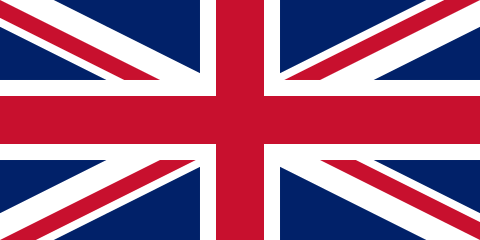
The four common ratios
| Ratio | Shape | Some of the countries that use it |
|---|---|---|
| 2:3 | The most common | France, Italy, Spain, Romania, Russia, Japan, China |
| 1:2 | Long, twice as wide as tall | United Kingdom, Ireland, Canada, Australia, Cuba, Nigeria |
| 3:5 | Between the two | Germany, Bangladesh |
| 1:1 | Square | Switzerland and Vatican City, the only two square national flags |
The unusual ones
Many countries fixed their ratio by law long ago, and the numbers are not always round.
- United States, 10:19. Slightly shorter than 1:2.
- The Nordic crosses. Denmark 28:37, Sweden 5:8, Norway 8:11, Finland 11:18, Iceland 18:25. Five related flags, five different ratios.
- Belgium, 13:15. Almost square on paper, although it is usually flown at 2:3.
- Qatar, 11:28. The only national flag more than twice as wide as it is tall.
- Nepal. Two stacked pennants: the only national flag that is not a rectangle.
Why the ratio matters
The ratio changes how a design reads. A cross that looks balanced at 2:3 gets long, thin arms at 1:2. A disc in the exact center of a long flag can look off-center once the cloth is flying, which is why Bangladesh sets its disc slightly toward the hoist. Vertical stripes get wider and horizontal stripes get longer as the flag stretches.
It also changes how flags look together. In a row of flags at the same height, a 1:2 flag takes a third more room than a 2:3 one. This is why events that fly many flags side by side, the Olympic Games among them, have them all made to one ratio, whatever the law at home says.
Choosing a ratio for your own flag
- 2:3 if you have no reason to choose otherwise. It is what most people picture as “a flag”, and it fits most designs.
- 1:2 for designs that run sideways: long horizontal stripes, or a canton with room beside it.
- 3:5 as a compromise when 2:3 feels cramped and 1:2 feels stretched.
- 1:1 only when the design is truly symmetric, like a centered cross. A square flag stands out because it is rare.
Decide the ratio before the details. Positions and sizes that look right in one shape need adjusting in another.
Try the four ratios
Vexil, our free flag designer, has these four ratios as buttons at the top, so you can switch and watch a design change. Its 34 real flags are each drawn at the nearest of the four: the United States at 1:2 instead of 10:19, Sweden at 3:5 instead of 5:8. New to flag design? Start with how to design a flag.